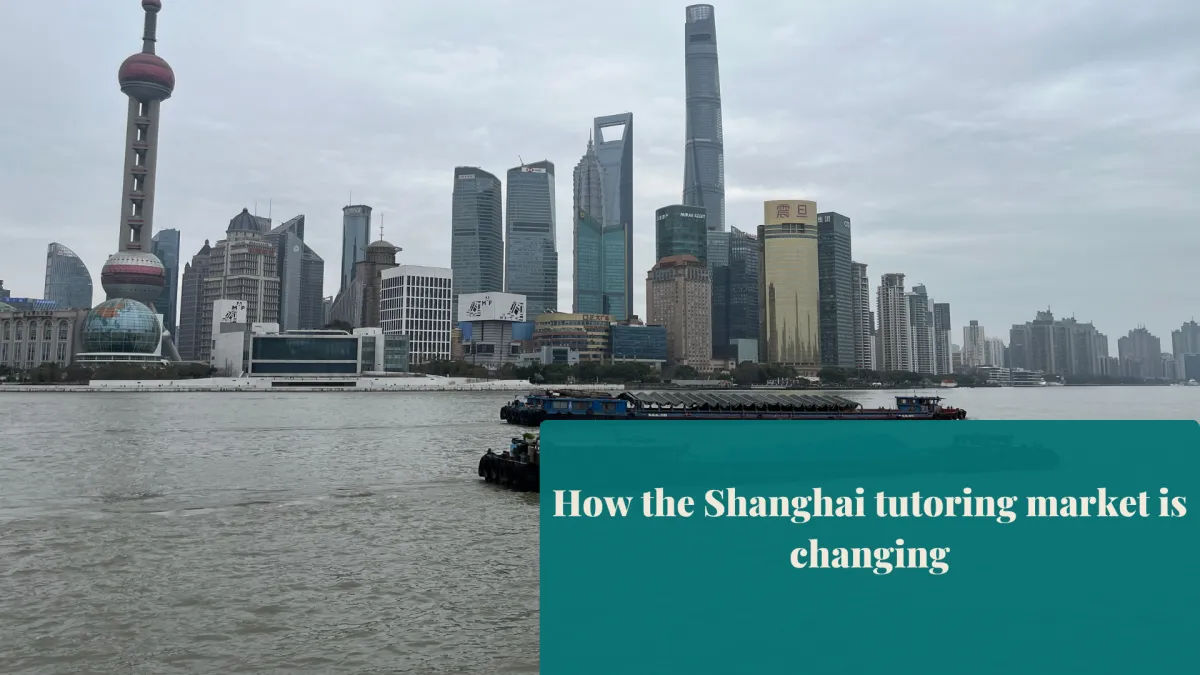
How the Shanghai tutoring market is changing
How the Shanghai tutoring market is changing
Once a month at Aster Advantage, we bring a working education agent from China into the room and let our tutors ask them anything. Most programmes don't give tutors that kind of access. This week's guest has been placing Shanghai families since 2009 and one thing she said has stuck with me.
For years, the fear has been that this market is shrinking. In Shanghai, it isn't. It has stopped growing at the pace it did five years ago, but the number of families going international is steady, held up by how the Chinese school system works. What is changing is what families want.
She walked us through a cycle. Ten years ago, international tutors were the prestige choice in Shanghai. Then standards slipped: some outfits used weak teachers and families cooled on the foreign name. A wave of Chinese graduates then came home from abroad and moved into tutoring. They shared the family's language and charged less than the international option. Parents liked their results, so the market moved toward them.
Now it is turning again. In her words, the local tutoring is "a kind of training." It produces the exam result and it does that well. But a growing number of families want more than a result.
They want their child to develop, as a learner and as a person. Her example was English. A good grade is no longer enough. They want the child to actually speak the language the way a native speaker does and most local tutors can’t take them there. So those families are coming back toward international tutors for exactly that. When she chooses tutors for her own children, she told us, she chooses international.
That is the premium shift. Every serious tutor can produce results now, so results alone no longer win the work. What wins it is what the exam cannot measure: whether a child comes out of the year more fluent and more sure of themselves. If that is what you do, this market is turning back toward you.
We spent the rest of the session on what to do about it: how agents find and vet the tutors they trust, what makes them refer you on to other agents and what your bio needs to say in its first three lines. That is the practical side, and it is the part we go through inside Aster Advantage.
Strip out the how-to and what's left is a simple change in what good tutoring means. For years, this market rewarded a fast result and a good score. It is starting to reward something slower and harder to fake: a child who can think and speak in another language and who grew as a person while they did it. If that’s the tutor you have always tried to be, the market is finally catching up to you.